
At a glance
- Who
- The Bollant group: Bollant Industries makes the leaf tableware, Bollant Foods exports it, and EarthCleanse sells to consumers. Srikanth Bolla founded the group.
- Where
- Areca units at Hubli and Bengaluru in Karnataka; sheaths collected from farmer partners in Karnataka, Kerala and Assam; US stock in Hayward, California and Baltimore, Maryland.
- When
- The first areca plate in 2012; Karnataka units from 2014 (Hubli) and 2016 (Bengaluru), as stated by the company; EarthCleanse launched in 2024.
- Scale
- Bollant Foods: 13 product ranges, more than 700 SKUs and two US warehouses.
The problem
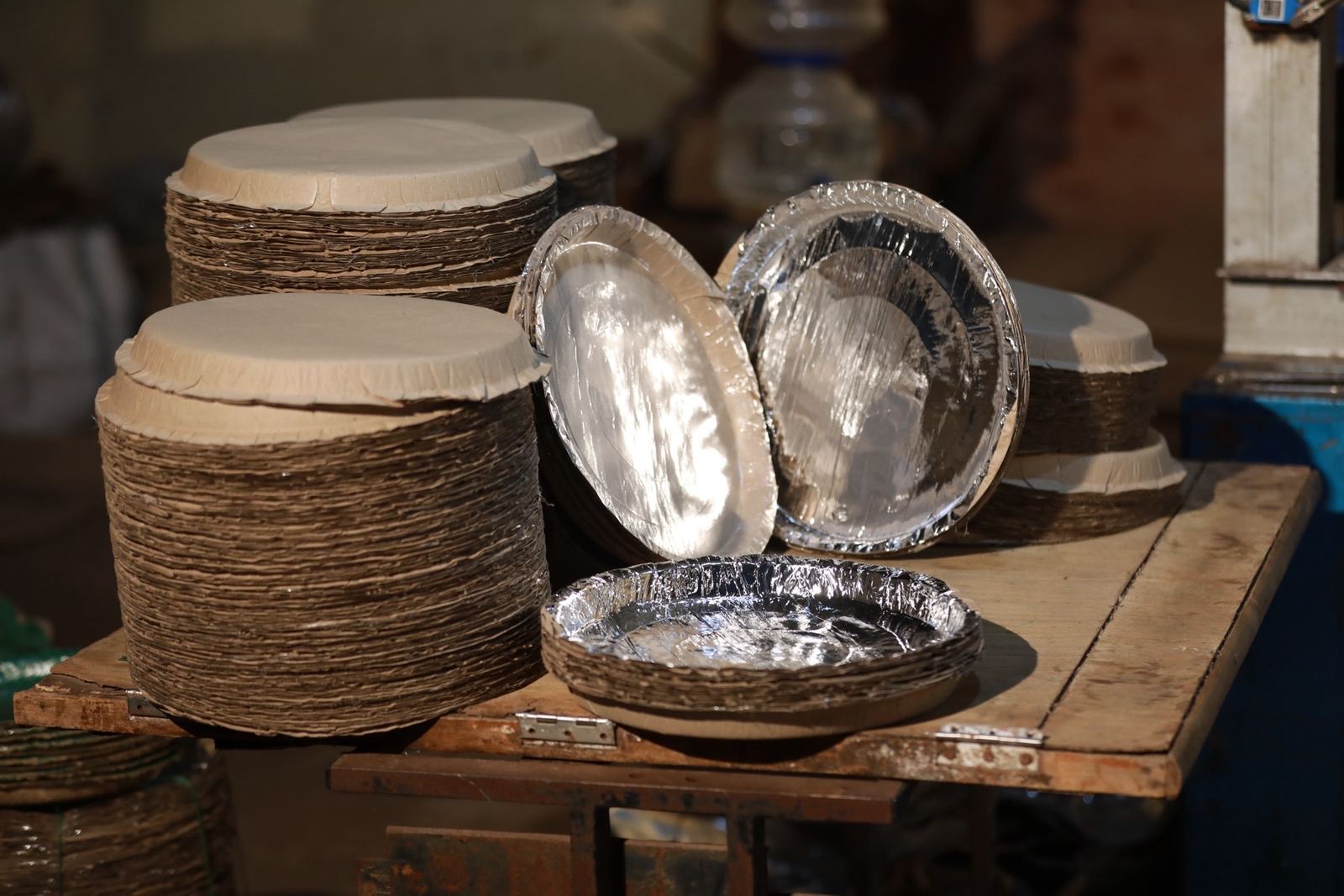
Areca palms shed their old leaf sheaths naturally to make room for new growth. The sheaths have been used as plates in South India for centuries, but on many farms they were simply swept up and burned. Meanwhile, caterers and retailers around the world were looking for disposable tableware that was not plastic.
Turning one into the other is harder than it sounds. For a manufacturer that has to promise consistency, a fallen sheath is a difficult raw material:
- It varies. Sheaths differ in size, thickness and colour, and a plate pressed from a thin sheath behaves differently from one pressed from a thick one.
- It is seasonal. Supply arrives in seasons and has to be collected and managed across the year.
- There was no supply chain. Because the material was burned as waste, nobody was collecting it.
- Nothing could be added. The product had to be made without binders, coatings or chemicals, so consistency had to come from the process.
The approach
Areca was Bollant’s very first product, in 2012, and it fitted both of the company’s aims: steady, skilled work for people other employers passed over, using material others threw away. Bollant built a line in which each stage removes some of the natural variation before a plate reaches a carton.
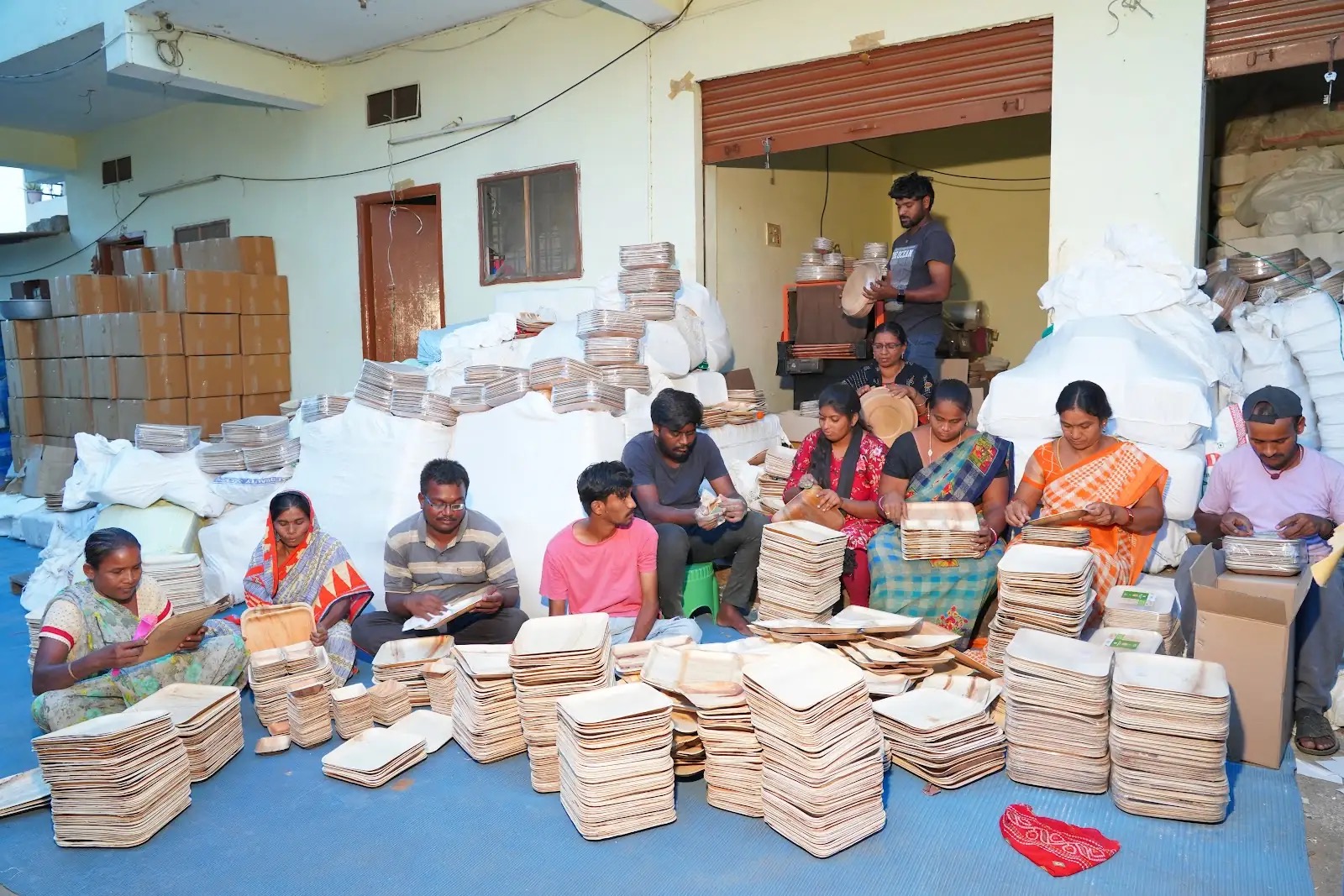
- Collect and pay. Sheaths are bought from farmer partners in Karnataka, Kerala and Assam, so a former waste product earns farming families an income. No trees are cut.
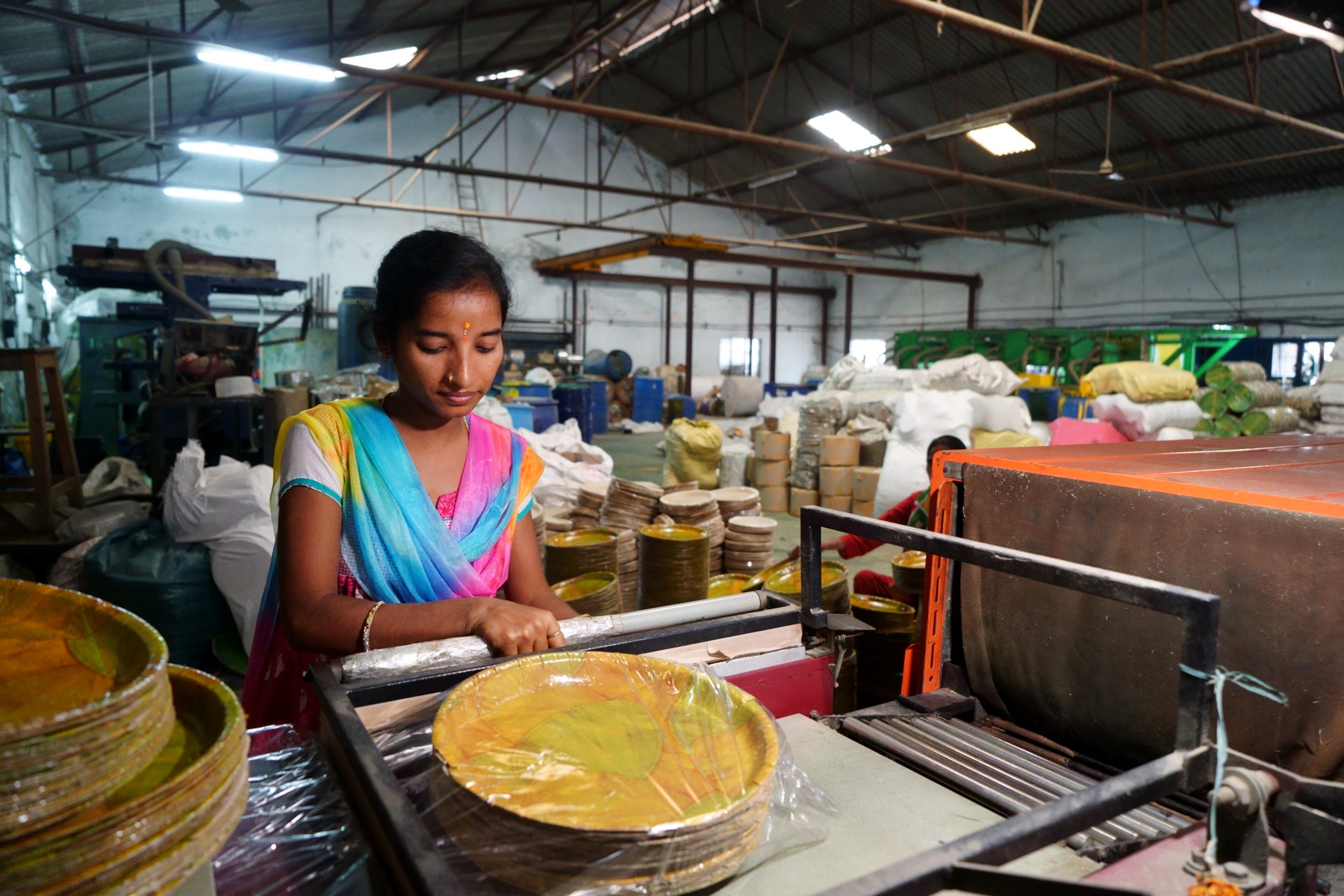
- Wash. Sheaths go through a multi-stage water and pressure line to remove soil and debris.
- Heat-press. Each cleaned sheath is pressed in a heated die. Heat and pressure shape it into a plate, bowl or tray with no binder.
- Treat, grade and pack. Pieces are UV treated and graded before packing, so each carton is consistent.
The units sit in Karnataka, close to the raw material and to the farmers who supply it.
The second half of the model is how the product reaches buyers. Bollant Foods is the group’s export house for foodservice disposables, covering everything a café, restaurant or office uses, from plates, bowls and containers to cups, cutlery, paper bags and napkins. Importers and distributors buy full or part container loads direct from India. For buyers who need smaller quantities or faster replenishment, US stock is held in warehouses in Hayward, California and Baltimore, Maryland, and sold through EarthCleanse.
What happened
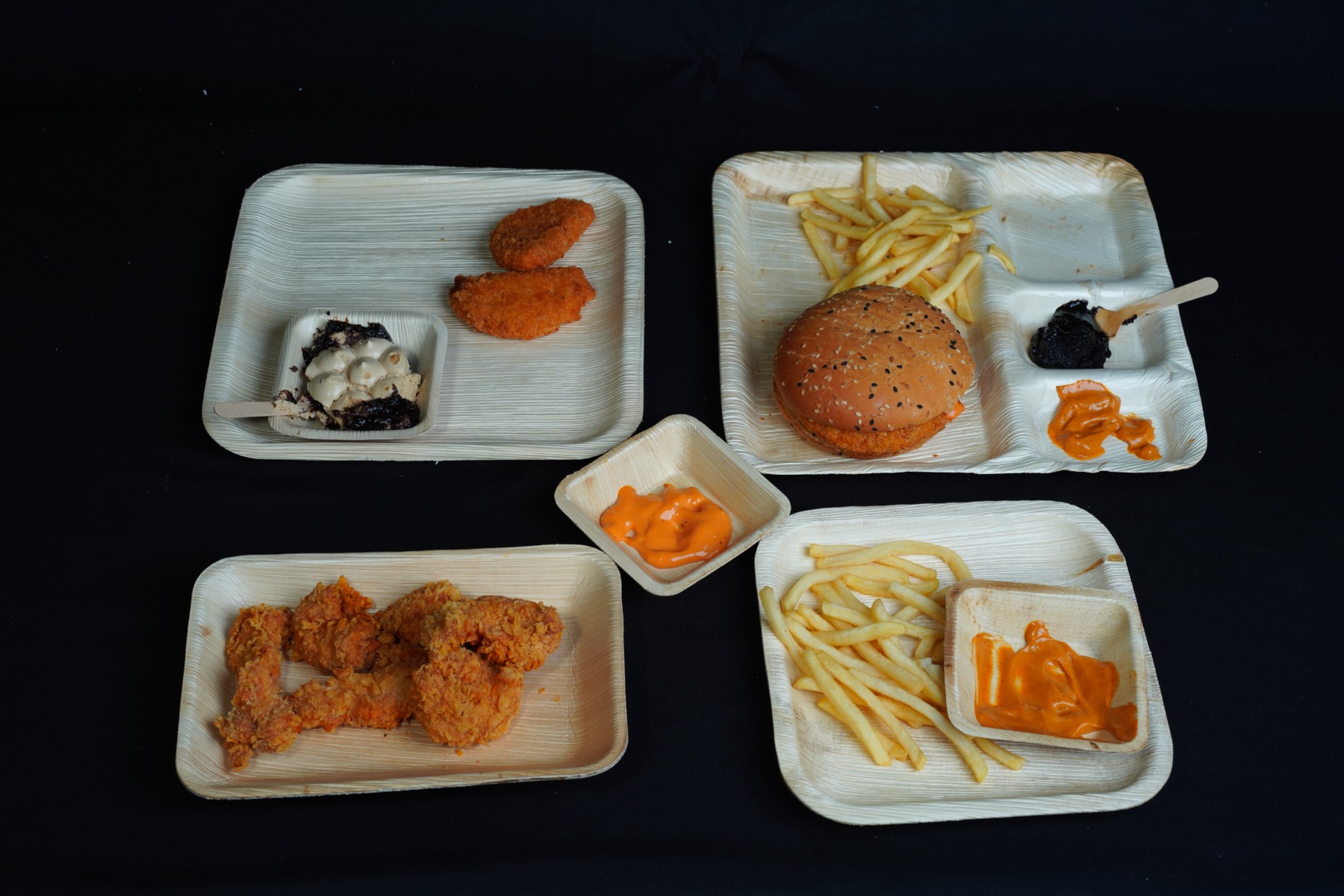
The line now makes a full range of natural leaf tableware: round plates from 6 to 12 inches, square plates from 6 to 10 inches, bowls from 4 to 8 inches, rectangular trays, and spoons, forks and coasters. Buyers include caterers, event companies, retailers and importers.
Bollant Foods has grown around that core into 13 product ranges and more than 700 SKUs, shipped worldwide. In 2024 the group launched EarthCleanse in the United States: a consumer brand of plastic-free, compostable tableware made from agricultural material such as areca, bagasse, plant fibre and birchwood, alongside plant-based home-care cleaners, sold at earthcleansestore.com.
A residue that farmers used to burn now supplies an export range and pays the people who collect it.
What it shows
Value chains can start from waste, but only if someone builds the unglamorous parts: collection, payment, grading and logistics. Bollant also keeps its claims honest. Areca is a single plant fibre with nothing added and can be described as compostable where customers have a compost bin or facility; natural colour and grain vary from piece to piece, which buyers manage by agreeing a grade at order.
For audiences, it is Srikanth’s clearest example of what he means by sustainability as a business, not a gesture: one material, a fair price at the farm gate, and a product good enough to sell abroad on its merits.
Frequently asked
What are areca leaf plates made from?
From the leaf sheaths that fall naturally from the areca palm. The sheaths are washed and heat-pressed in a die, with no binders, coatings or chemicals added.
Are areca leaf plates compostable?
Areca is a single plant fibre with nothing added, so it can be described as compostable where the user has a compost bin or composting facility.
Where does Bollant make its areca tableware?
At its units in Karnataka, at Hubli and Bengaluru, close to the farmer partners who supply the sheaths.
What is the difference between Bollant Foods and EarthCleanse?
Bollant Foods is the group’s export house, selling container loads to importers and distributors. EarthCleanse is the consumer brand, selling in the United States from warehouses in Hayward, California and Baltimore, Maryland.
Sources
- Areca leaf: turning a burned residue into an export-grade product line, Bollant Industries (opens in a new tab)
- Natural leaf tableware, Bollant Industries (opens in a new tab)
- Bollant Foods (opens in a new tab)
- EarthCleanse (opens in a new tab)
- More than 50 Indians in Forbes’ under 30 list of super achievers, Gulf News, April 2017 (opens in a new tab)