Key facts
- 1991
- Born blind in Seetharamapuram, near Machilipatnam, Andhra Pradesh
- 2012
- Becomes founder, chairman and CEO of Bollant Industries
- Today
- Leads more than 500 people across two recycling paper mills and eight manufacturing units
- 2021
- Selected as a World Economic Forum Young Global Leader
- 2025
- Guest Shark, Shark Tank India Season 4
How does a blind CEO make decisions?
The same way any good executive does, with one difference: he cannot fall back on a glance at a screen or across a room. Every decision has to rest on information that can be spoken, touched or tested. That removes a shortcut that sighted leaders often take, and it forces a discipline they could use too.
He explained the appeal of management to MIT News in 2011, when he was still a student:
With management, it’s in my hands. I can use management skills however I like.
Decision-making, in that sense, is a skill built from questions, not from what happens to be in view.
Why is trust a system, not a feeling?
A leader who cannot see the dashboard depends on the people who read it. That makes trust unavoidable, and it also makes it something to design. Trust works when people know what is expected, report what they find, and know that bad news will be heard rather than punished.
At Bollant, the tagline “Where everyone counts” describes lines built so that people of every ability can run them to one output standard. A shared standard is what lets a leader trust a report: everyone is measuring against the same thing.
How does he check what he cannot see?
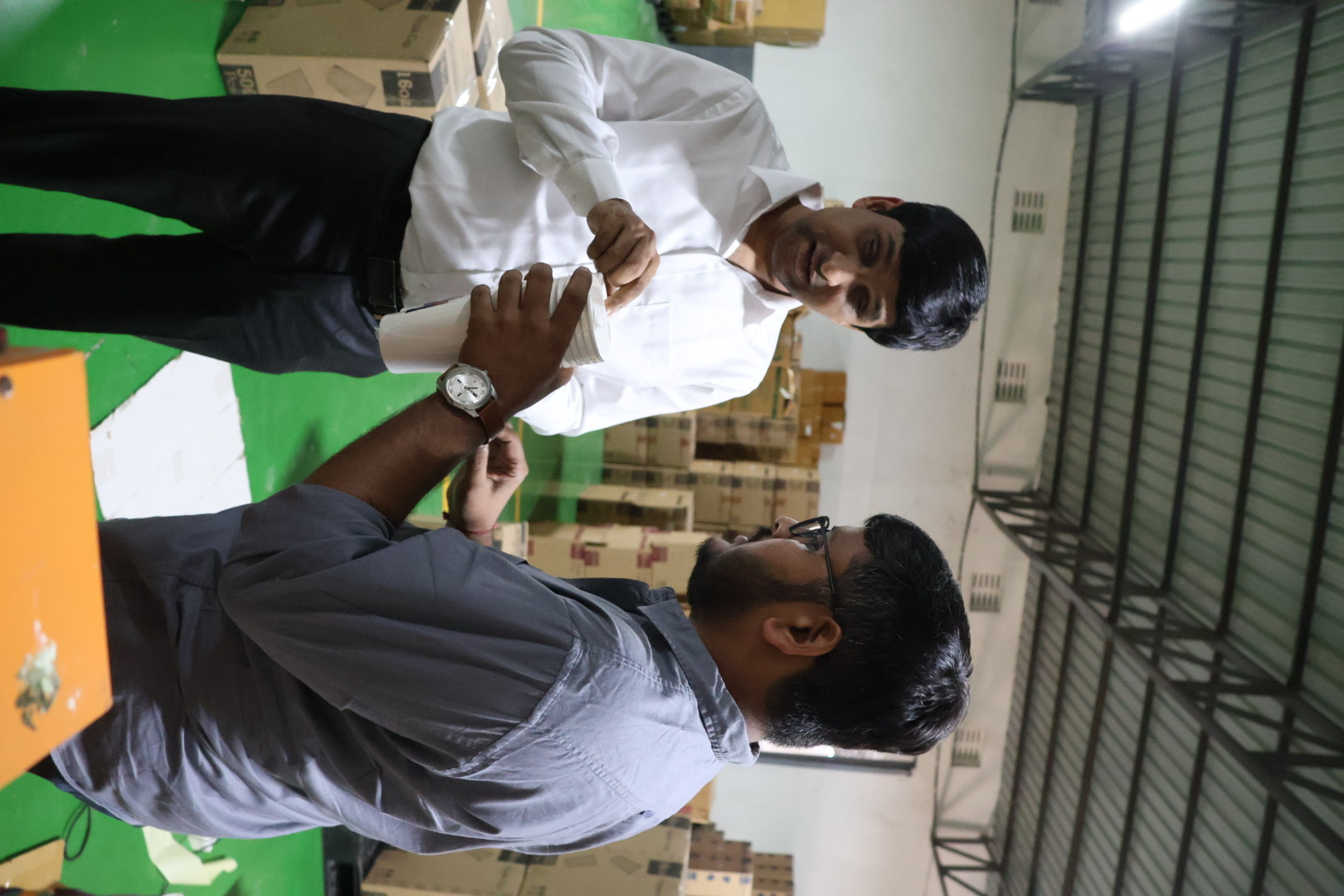
By going to the product and the people. In the site’s own photographs from Bollant units he turns a paper-cup blank over in his fingers, feels the finish of a paperboard reel and talks through a stack of cups with a colleague. The hand checks what the eye would have checked; the conversation checks the rest.
Asking is the other half. A leader who asks the operator first and the report second hears problems earlier. That habit is described in more detail in Leadership lessons from a blind CEO.
What happens when the information is wrong?
Any leader eventually acts on a report that turns out to be wrong. The defence is not more suspicion; it is more structure. Clear standards show when something has drifted. Checks by touch and by a second person catch what a single reader misses. And a culture that rewards early warnings means mistakes surface while they are still small.
The same thinking shaped how he questioned founders as a Guest Shark on Shark Tank India Season 4. Business Today reported him telling one team: “There is a big difference between a rule being introduced and a rule being implemented.” A plan is a report. Implementation is the evidence.
How do you decide whom to trust?
Slowly, and on evidence. The founding of Bollant shows the pattern. Ravi Mantha co-founded the company with him in 2012 and was its first investor, backing it before there were any results. Ratan Tata invested in 2016, once four years of work could be examined. Early trust and later trust rest on different evidence, and a leader needs to know which kind he is giving.
Inside a company, the same principle scales down to daily work. Give people a clear standard, see whether they meet it, and widen their responsibility as they do. Delegation then stops being a leap of faith and becomes a record that everyone on the team can check.
What can sighted leaders take from this?
Three habits. Treat every important number as something to be explained out loud by the person responsible for it. Go and handle the product your customers will handle. Build standards clear enough that you can trust a report you did not produce yourself.
Being blind made these habits necessary for him from the start. They are no less useful for leaders who can see, and they scale: the same habits run a group of more than 500 people across mills and manufacturing units.

Frequently asked
How does a blind CEO make decisions?
From information that can be spoken, touched or tested: what colleagues report, what the product feels like in the hand, and what has been checked against a standard. Srikanth Bolla leads Bollant Industries this way.
How does Srikanth Bolla build trust with his team?
By making trust a system. Bollant’s lines run to one output standard for everyone, so reports are measured against the same thing, and he checks products by hand and in conversation with the people who make them.
Can a visually impaired person be a CEO?
Yes. Srikanth Bolla, blind since birth, has been founder, chairman and CEO of Bollant Industries since 2012. The group has two recycling paper mills, eight manufacturing units and more than 500 people.
What can sighted leaders learn from a blind leader?
To ask for important numbers to be explained by the person responsible, to handle the product customers will handle, and to build standards clear enough to trust reports they did not produce.
Does Srikanth Bolla speak about leadership?
Yes. Leadership without limits, on leadership, resilience and responsibility from running a manufacturing group, is one of his talks for leadership offsites and executive audiences.
Sources
- MIT News, “Inspired to help others”, 15 November 2011 (opens in a new tab)
- Business Today, Shark Tank India Season 4 report, 20 March 2025 (opens in a new tab)
- Business Standard, “Srikanth Bolla joins Shark Tank India as the newest ‘Shark’”, 17 March 2025 (opens in a new tab)
- Forbes India, “Srikanth Bolla: First overseas blind student at MIT …”, 29 April 2024 (opens in a new tab)
- BBC News, profile of Srikanth Bolla, 24 January 2022 (opens in a new tab)
- Bollant Industries, company website (opens in a new tab)
Facts about Bollant are as the company publishes them; more of his words, each with its source, are on the quotes page.