
The idea
Most people measure themselves against a line someone else has drawn: the stream a school allows, the college a coaching centre thinks you can reach, the job an employer thinks you can do. Srikanth Bolla has spent his life refusing those lines. Born blind in 1991 to a farming family near Machilipatnam, he was told again and again what a blind boy could not do. Each time, he set a higher mark of his own and reached it.
The six principles below are this site’s summary of how he has worked, not a speech. Each is tied to a fact with a source. Where his own words appear, they are quoted as the outlet published them.
A rule that shuts you out can be changed
After scoring 98% in Class X, he was told the science stream was closed to him because he was blind; only arts was open to blind students. He took the education board to court, and after about six months the board agreed. He became the first blind student in Andhra Pradesh allowed to study science. The lesson he took was simple: a rule is not a law of nature. If it is unfair, challenge it. The full story is on the fight to study science.
A closed door is a reason to aim higher
When he set his sights on IIT, the coaching institutes that prepare students for its entrance examination turned him away. He told Business Today he was warned that the course load would be like pouring rain on a small sapling. So he applied to universities in the United States instead. The Better India reported that he was admitted to MIT, Stanford, Berkeley and Carnegie Mellon, and chose MIT, where he became its first international blind student. His own summing-up, as The Better India printed it: If IIT doesn’t want me, I don’t want IIT either!
More on his route to MIT.
Learn the thing you were told to fear
In his first year at MIT he had never swum. He took the beginner course and, on the last day, stepped off the diving board into water about 16 feet deep, as MIT News reported in June 2010. His instructor asked him to go first, because his courage helped the rest of the class. He told the paper: If we are persistent, we can rise above our circumstances.
The same spirit took him into beep baseball, ice-skating, scuba diving and archery; see Beyond the boardroom.
Start small, but start now
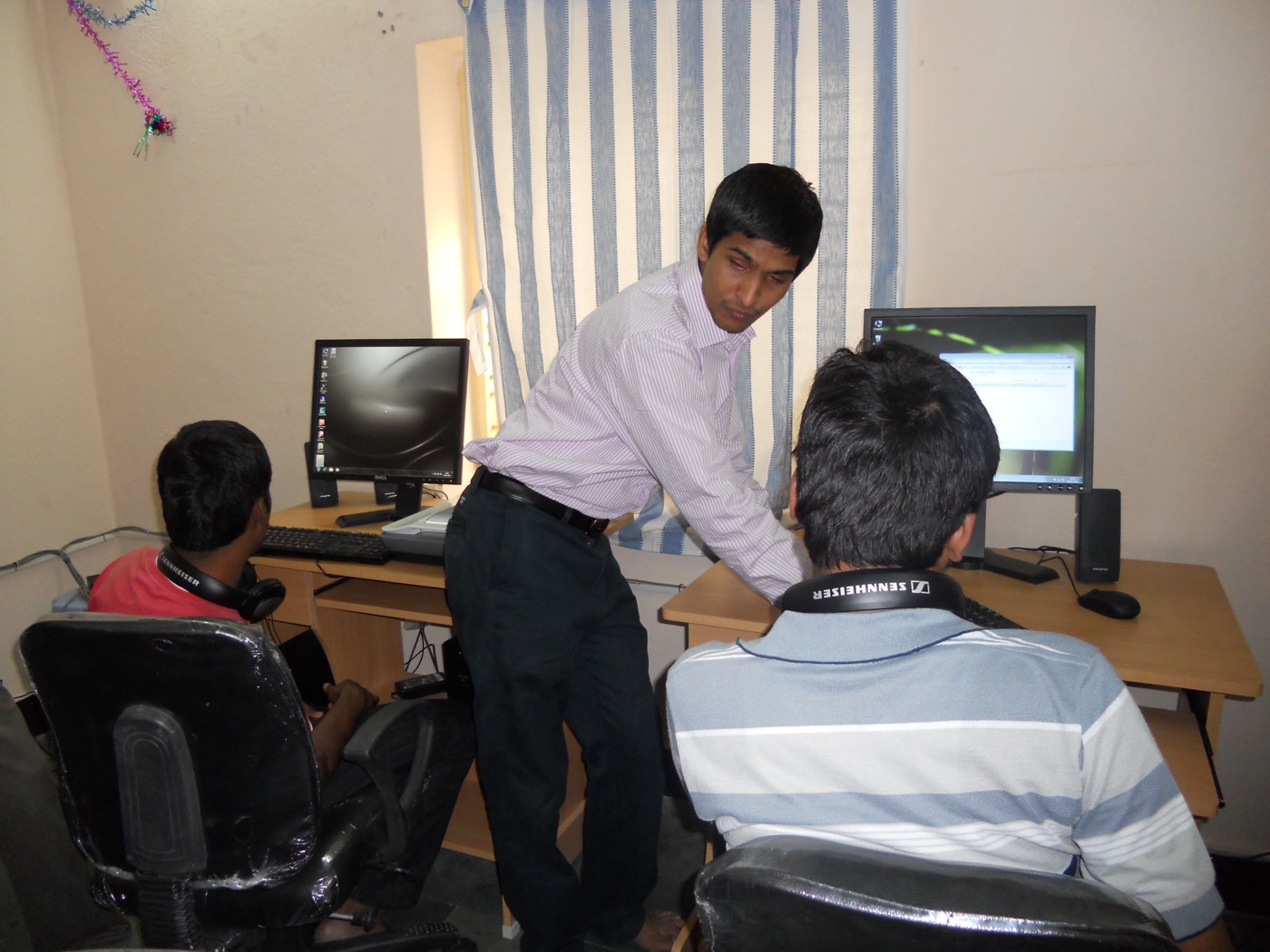
He did not wait to graduate before building something. As an MIT student he used a fellowship from MIT’s Public Service Center to set up a computer-training centre for blind students in Hyderabad. MIT Spectrum reported in 2011 that he wrote the curriculum, used grants to buy five computers, rented a building, hired a faculty member and started 10-week classes. A small, measurable start became the base for everything after it. The story is on Giving back.
Let the work be the argument
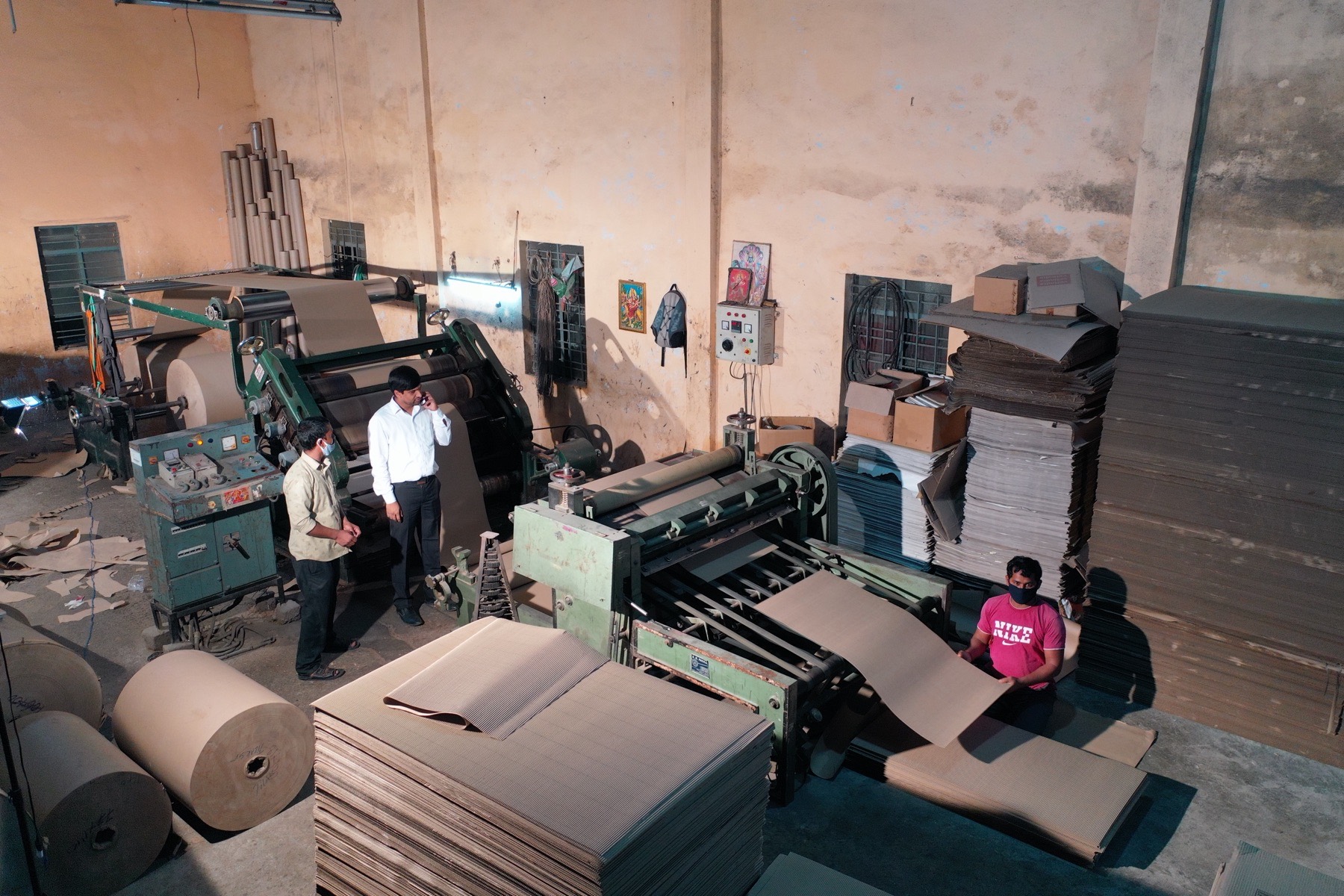
A blind founder in his early twenties, setting out to run factories, could have spent years arguing that he was able to. He did not argue the point; he built them. In 2012 he co-founded Bollant Industries in Hyderabad with Ravi Mantha. In 2016 Ratan Tata invested. Today the group runs two recycling paper mills and eight manufacturing units across Telangana and Karnataka, with more than 500 people. The numbers make the case better than any speech could. See Building Bollant and Ratan Tata and Bollant.
Measure yourself by what is left to do
Even as a student with a training centre and a growing name, he refused to rest on it. Asked by MIT News in 2011 what he was most proud of, he answered: I’m not proud ... I have to do much, much more.
That is what setting your own benchmark means in practice. Once you reach a mark, you set the next one.
Frequently asked
What is Srikanth Bolla’s philosophy?
He does not accept the limits others set for him. He sets his own benchmarks and then raises them, from winning the right to study science to building a manufacturing group.
How did Srikanth Bolla win the right to study science?
After scoring 98% in Class X he was told science was not open to blind students. He took the education board to court and, after about six months, the board agreed. He became the first blind student in Andhra Pradesh allowed to study science.
Why did Srikanth Bolla go to MIT instead of IIT?
The coaching institutes that prepare students for the IIT entrance examination turned him away, so he applied to universities in the United States. He was admitted to MIT, Stanford, Berkeley and Carnegie Mellon and chose MIT, where he became its first international blind student.
Are the principles on this page his own words?
The six principles are this site’s summary of how he has worked, each tied to a sourced fact. The words in quotation marks are his, as MIT News and The Better India published them, and are linked in the sources.
Sources
- The Better India, “Refused by IIT, this blind man went on to become an MIT grad and CEO”, April 2016 (opens in a new tab)
- Business Today, profile of Srikanth Bolla, 11 April 2024 (opens in a new tab)
- MIT News, “Srikanth Bolla ’13 proves that anyone can learn how to swim”, 15 June 2010 (opens in a new tab)
- MIT Spectrum, “Living his dream”, Spring 2011 (opens in a new tab)
- MIT News, “Inspired to help others”, 15 November 2011 (opens in a new tab)
- YourStory, “Hyderabad-based Bollant Industries raises funds from Ratan Tata”, February 2016 (opens in a new tab)
Bollant figures are as the company publishes them. More of his words, each with its source, are on the quotes page.