Leadership lessons from a blind CEO.

How Srikanth Bolla, a visually impaired entrepreneur and the founder, chairman and CEO of Bollant Industries, runs a manufacturing group: by touch, by listening and by design.

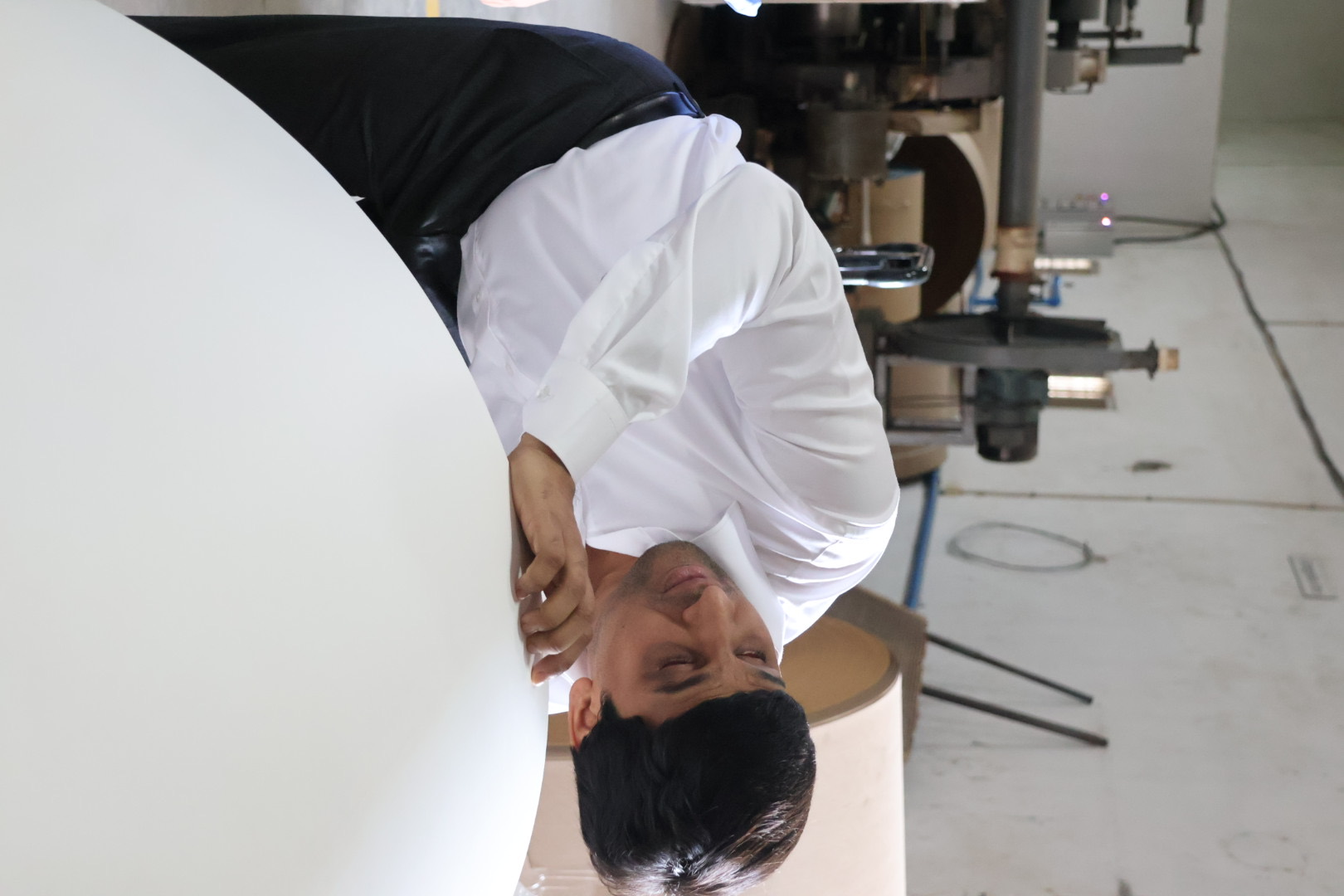
Srikanth Bolla in a white shirt leaning over a large reel of white paperboard, his cheek and hands resting on it as he feels the material, with machines behind him

Most writing about blind leaders is about the leader. This piece is about the work: how Srikanth Bolla runs a group with two recycling paper mills, eight manufacturing units across Telangana and Karnataka, and more than 500 people. He has been blind since birth. He has also said, to Forbes India in 2024: “I never felt I was disabled or blind.”

What follows is what that looks like on a factory floor, drawn from our own photographs of Bollant’s units and from the public record.

1. Lead by touch.

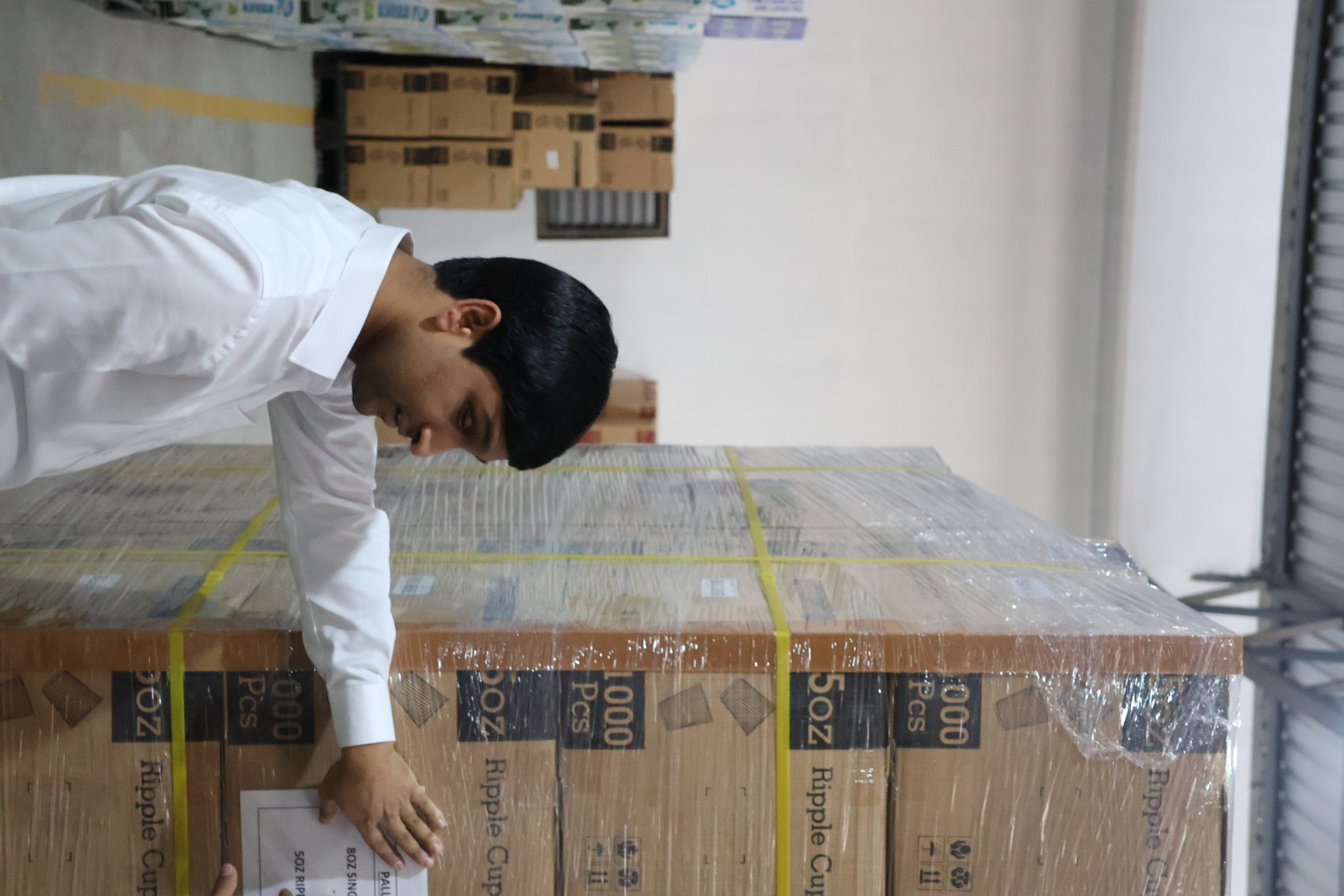
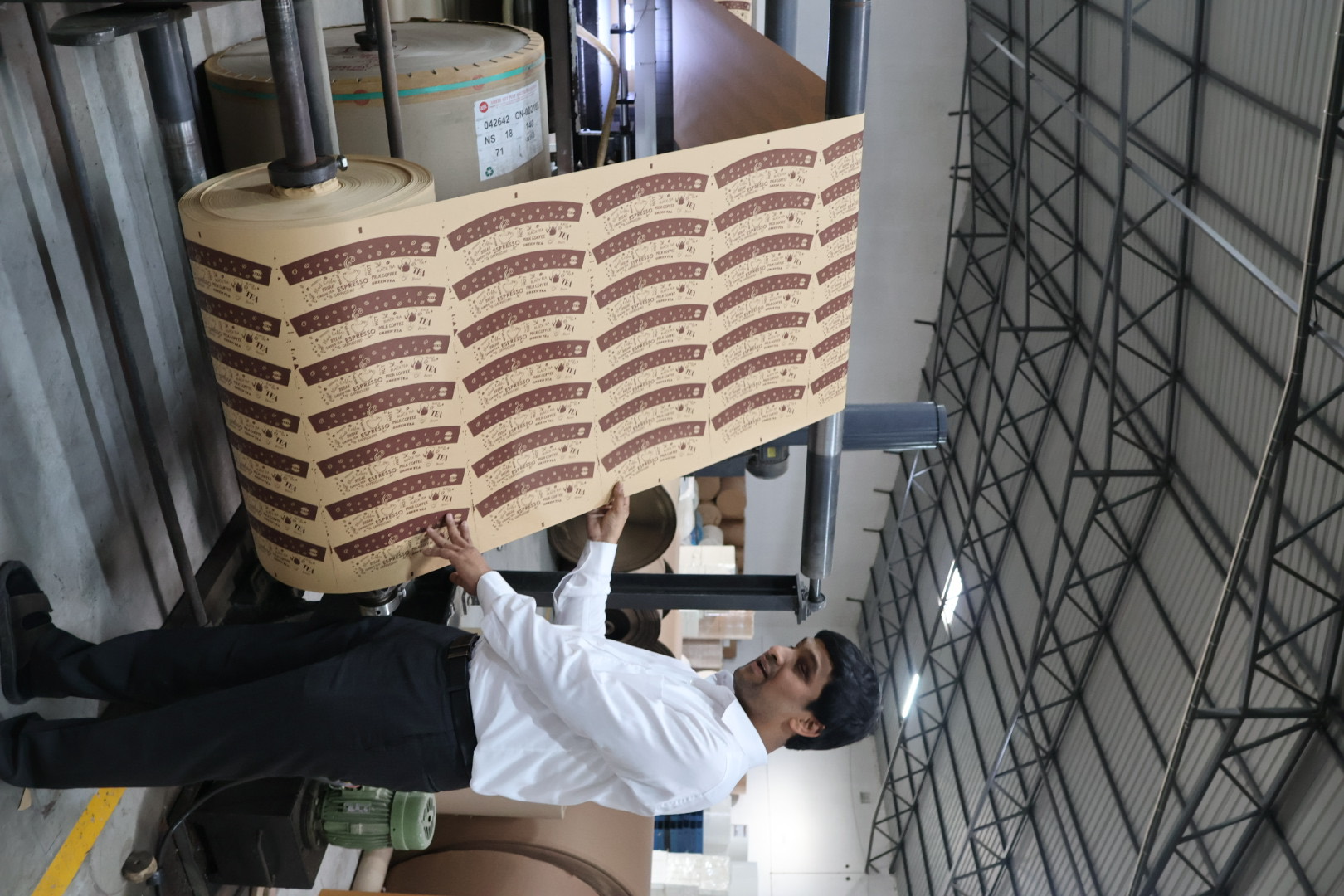
On the floor, he inspects the product the way he reads the world: with his hands. In the photographs on this page he leans in to a reel of paperboard to feel its finish, runs his hands along a printed kraft web at the unwinder, rests a palm on a finished pallet, and turns a paper-cup blank over in his fingers while a colleague talks him through it.

None of this is ceremonial. A cup blank either has the right stiffness and a clean edge or it does not, and a hand can tell. The lesson for any leader is about proximity. You cannot assess quality from a dashboard alone. At some point you have to touch the thing your customers will touch. It is also a signal to everyone watching: the person at the top cares about the same details they do.
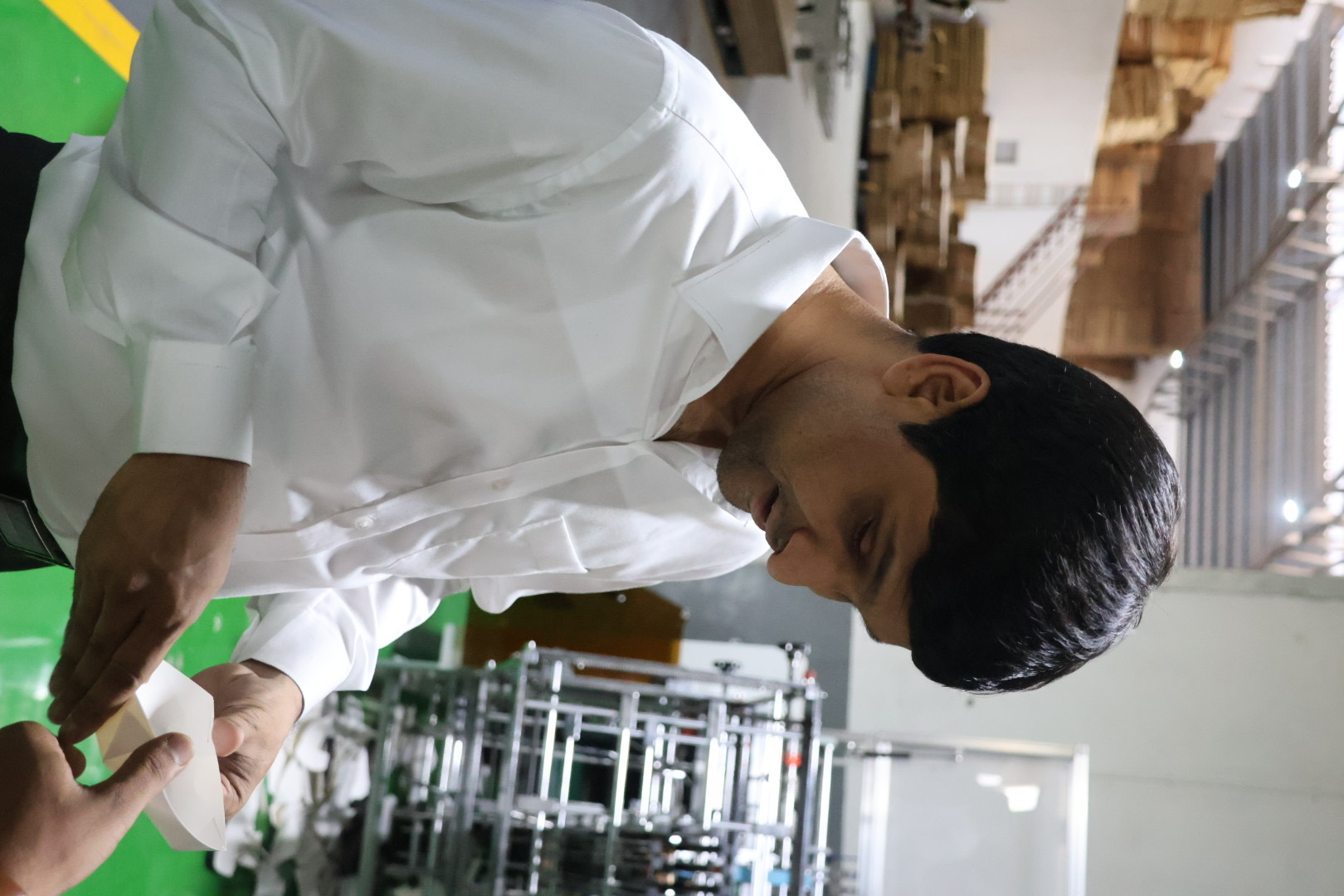
Srikanth Bolla, head bowed, feeling a paper-cup blank that a colleague hands him beside a cup-making machine
Checking a paper-cup blank by hand.
Srikanth Bolla smiling at a kraft paper unwinder, his hands on a tall sheet of printed cup blanks, under a truss roof
At the unwinder, hands on a printed kraft web.
Srikanth Bolla in profile, his palm flat on a shrink-wrapped pallet of paper-cup cartons in a Bollant warehouse
Reading a finished pallet by touch.
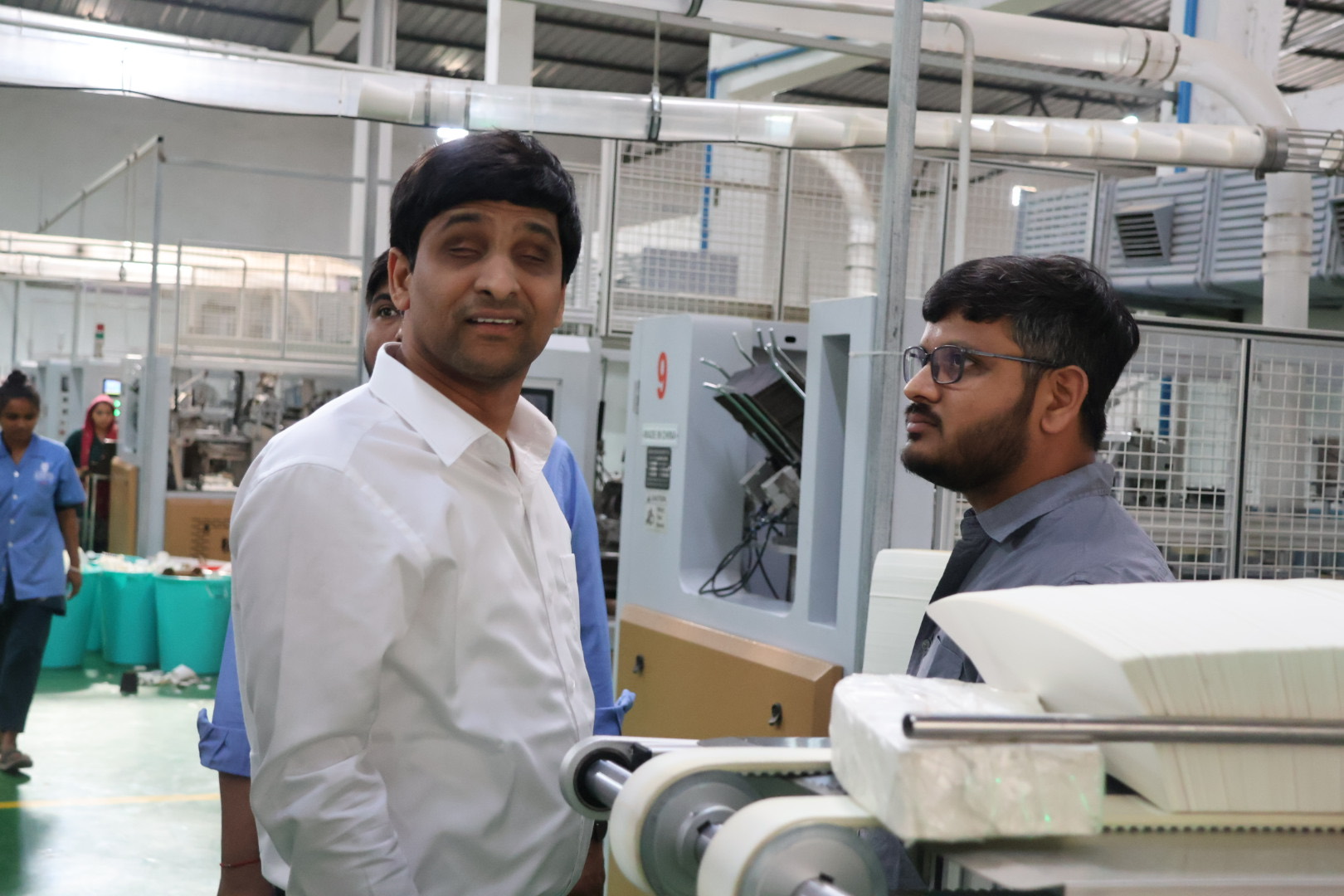
Srikanth Bolla smiling as he talks with a colleague in glasses beside a cup-forming machine, with workers in blue uniforms in the background
In conversation on the cup-machine floor.

2. Make the floor talk to you.

A blind CEO cannot walk the line and glance at a gauge, so the line has to become legible another way: through the people who run it.

In our photographs from the cup-machine floor he is mid-conversation with the people at the machines. Leaders who can see often skip that step because the screen seems to answer the question. The habit worth copying is to ask the operator first and the dashboard second.

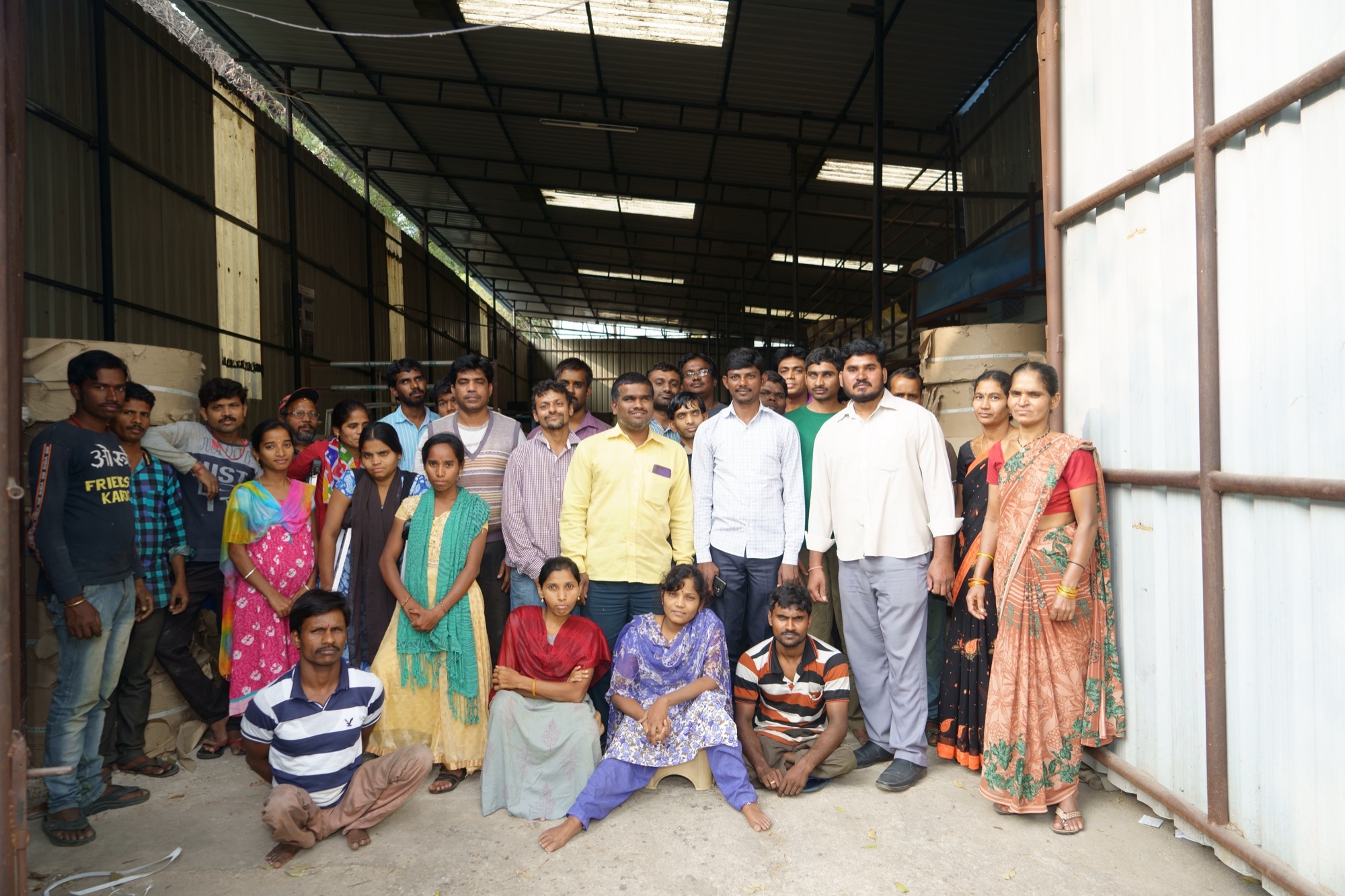
About thirty Bollant workers, men and women, posing together in a long shed with skylights, several seated on the floor in front
A Bollant team in one of the group’s sheds.

3. “Where everyone counts” is a design spec.

Bollant’s tagline is “Where everyone counts”, and the company describes its lines as built so that people of every ability can work on them.

That is a design decision, not a slogan. A line built for every ability has to be thought through: how it is laid out, how work is handed over, how people are trained. Inclusion that lives only in a policy document tends to break the first time a line is under pressure. Inclusion built into the line keeps running.

4. Hire for capability.

He has started from what people can do since the Samanvai Centre in 2011, and at Bollant since 2012.

Hiring for capability means writing the job around the output rather than around assumptions about who can deliver it. It widens the pool.

5. Hold one standard.

Inclusive does not mean lenient.

Bollant’s products go to customers who care whether the cup holds, not who made it, and its export house, Bollant Foods, ships foodservice ware worldwide from Hyderabad. One output standard, met by everyone, is the respectful version of inclusion. It also protects the people on the line: when the standard is the same for all, nobody’s work is treated as a favour, and nobody’s place depends on goodwill.

The group he leads

500+people across the group

8manufacturing units

2recycling paper mills

36products in seven families

As published by Bollant Industries. Inside Bollant

6. Rules are not results.

As a Guest Shark on Shark Tank India Season 4, he questioned a founding team on how their business would scale, with a line every operator will recognise:

There is a big difference between a rule being introduced and a rule being implemented.

Srikanth Bolla, Shark Tank India Season 4, reported by Business Today, 2025

Anyone who has built inclusion into a real workplace knows that gap. A policy is a promise. A working line is the proof. For a founder who once had to go to court to be allowed to study science, the difference between a rule on paper and a rule in practice is personal as well as commercial.

7. Stay restless.

He describes his own pace without decoration: “I am a work animal. I don’t like to sit idle.” (Forbes India, 2024.) Running mills, units and an export house at the same time is not a job for someone who waits for the next report, and the pace at the top sets the tone for the floor as much as any policy does.

Leadership lessons, full stop.

Leadership lessons from a blind CEO turn out to be leadership lessons. Get close to the product. Make the floor legible through people. Design inclusion into the process. Hire for what people can do, and hold everyone to the same standard. Being blind made these habits necessary for him earlier than for most. It does not make them any less useful for anyone else.

More on how he built it.

The company, its backers and the lessons from his story.

Bring a CEO’s view of inclusion to your leaders.

For leadership offsites, diversity and inclusion summits and operations teams: how to build a workplace where everyone counts, and keep it running.